
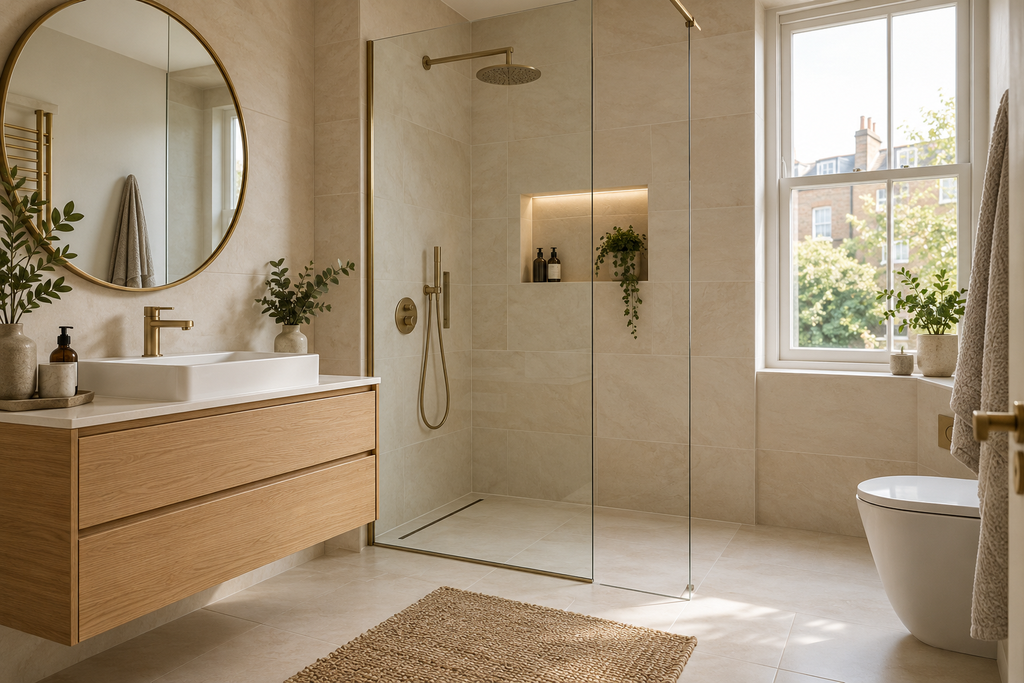
A well-designed bathroom should feel comfortable, look beautiful and make everyday life easier. Whether you want to replace an outdated suite, create a walk-in shower or completely redesign your family bathroom, careful planning makes all the difference.
At Home Construction & Renovations, we help homeowners with bathroom renovations across London, Buckinghamshire, Slough, Windsor, Maidenhead and Epping. From compact en-suites to complete bathroom refurbishments, our focus is on practical layouts, careful installation and a finish that suits your home.
If you are planning a bathroom renovation, these are the questions to ask before work begins.
What does a complete bathroom renovation include?
A complete bathroom refurbishment involves much more than replacing the bath and tiles. The work behind the surfaces matters just as much as the visible finish.
Depending on the agreed quotation, your project may include:
- Protecting access routes and surrounding areas.
- Removing the existing bathroom suite, tiles and flooring.
- Checking exposed pipework, walls and floors.
- Altering water supplies and waste pipes.
- Preparing suitable surfaces for tiling.
- Installing a waterproofing system in the required wet areas.
- Electrical work, lighting and extractor fan installation.
- Fitting the bath, shower, toilet, basin and bathroom furniture.
- Wall and floor tiling.
- Decorating, sealing, testing and final snagging.
- Removing the agreed renovation waste.
Before accepting a quotation, check which of these items are included and which products you need to purchase separately.
How much does a bathroom renovation cost?
The cost depends on the size of the room, its existing condition, the proposed layout and your choice of fittings.
A straightforward replacement with the main fixtures staying in their current positions generally involves less work than a complete redesign with relocated drainage, concealed plumbing and extensive repairs.
The main factors affecting your bathroom renovation quotation are:
Layout changes: Moving a toilet, shower or bath can require additional pipework and changes to the floor or walls.
Condition beneath the existing finishes: Leaks, damaged flooring and loose plaster may only become visible after the old bathroom is removed.
Tiles and installation details: Large tiles, mosaics, patterns, recessed shelves and specialist trims can increase preparation and fitting time.
Bathroom products: Taps, shower systems, sanitaryware and furniture vary considerably in price and installation requirements.
Access and waste removal: Flats, restricted parking and difficult access can affect the work involved.
Additional features: Underfloor heating, bespoke storage and specialist lighting need to be allowed for from the beginning.
The most useful starting point is a site visit and a written quotation based on your actual bathroom. Share your intended budget early so the specification can be planned sensibly.
How long does a bathroom refurbishment take?
Your programme should reflect the work required rather than a fixed promise made before the room has been inspected.
A refurbishment can involve several stages: removal, repairs, plumbing, electrical work, waterproofing, tiling and fitting. Drying and curing periods must also be respected.
Structural repairs, changes to the layout, delayed products and bespoke items can extend the programme.
Before work starts, ask your bathroom installer to confirm:
- The expected start date and working days.
- When the toilet, bath and shower will be unavailable.
- Which products must arrive before installation begins.
- How unexpected repairs will be handled.
- When the bathroom can safely be used after sealing and finishing.
A clear programme helps you plan around the disruption.
Can I stay at home while my bathroom is being renovated?
Often, yes, but the practical arrangements need to be discussed in advance.
If you have another bathroom, the work is usually easier to manage. If it is your only bathroom, agree how you will manage washing and toilet facilities during the installation.
There may also be short periods when the water needs to be turned off. Ask for notice of these interruptions, particularly if you work from home or have young children.
Can you make a small bathroom feel bigger?
A small bathroom can work beautifully when the layout makes good use of the available space.
Useful options include:
- A compact vanity with built-in storage.
- A wall-mounted basin or vanity where suitable.
- A clear shower screen that keeps sightlines open.
- A mirrored cabinet combining storage and a mirror.
- Light colours with a consistent finish.
- Carefully positioned lighting.
- A door arrangement that avoids clashes with fittings.
Product dimensions matter. A basin or toilet that looks compact online may still leave too little room to move comfortably.
For a small bathroom renovation, start with accurate measurements and a practical layout before ordering the suite.
Should I choose a bath or a walk-in shower?
Think about how your household uses the bathroom.
A bath may suit families with young children or anyone who enjoys soaking. A walk-in shower may suit someone who wants easier everyday access or a more open layout. A shower over the bath can combine both functions where space is limited.
Before replacing a bath with a shower, consider:
- Whether another bath is available in the property.
- Your present and future access needs.
- Shower screen positioning and splash control.
- Drainage routes and available floor depth.
- Cleaning and maintenance.
A level-access shower needs particular attention to floor construction, drainage falls and waterproofing. Its suitability should be assessed before the design is finalised.
Can I move the toilet, basin or shower?
Often, but the existing drainage and building structure will influence what is practical.
Toilets require a suitable connection to the soil pipe. Moving one across the room may involve more work than moving a basin. Shower drainage also needs a suitable route and fall.
In flats, shared services and restrictions on alterations can add further considerations.
Before agreeing a new layout, have the water supplies, drainage routes, floor construction and access for maintenance checked.
Is waterproofing necessary behind bathroom tiles?
Tiles and grout alone should not be treated as a complete waterproofing system.
Shower areas and other relevant wet zones need an appropriate system beneath the finish, installed in accordance with its specification. This can include membranes, compatible boards, sealing tapes and details around pipe penetrations and junctions.
A neat tiled surface cannot compensate for poor preparation underneath.
Ask your installer what waterproofing system is proposed and how the shower tray, bath edges, corners and other vulnerable junctions will be treated.
Which tiles and flooring should I choose?
Choose materials for the way the bathroom will be used, as well as their appearance.
Porcelain tiles are a popular option for bathroom walls and floors. Ceramic tiles can also suit walls, while natural stone can create a distinctive finish but may need more specialist care.
For floors, check that the product is suitable for bathroom use and consider its slip performance when wet.
Other points to discuss include:
- How easy the surface will be to clean.
- The preparation required underneath.
- Tile weight and suitability for the wall.
- Grout colour and maintenance.
- Compatibility with underfloor heating, if planned.
Large tiles can create a calm finish with fewer grout lines, but they need suitable surfaces and thoughtful setting out.
How can I reduce condensation and mould?
Effective ventilation should be part of the bathroom design.
An extractor fan needs to suit the room and its duct route. Its location, controls and discharge arrangement affect how well it removes moisture.
Heating, insulation, regular cleaning and how the room is used also matter. Persistent mould should be investigated because condensation, plumbing leaks and other damp problems require different solutions.
Painting over the affected area will not resolve the underlying cause.
Will my existing water pressure suit a new shower?
It needs to be checked before you buy.
Some shower systems require particular water pressure and flow rates. A large rainfall shower may not perform as expected if it is incompatible with the property’s hot-water system.
Ask your installer to assess the available supply and check the manufacturer’s requirements. Choosing compatible products at the start helps avoid disappointing performance and unnecessary alterations later.
Can I supply my own bathroom suite and tiles?
Yes, this can be agreed as part of the project.
Before placing an order, have the specifications checked for:
- Dimensions and installation clearances.
- Tap and shower compatibility.
- Waste positions and required fittings.
- Shower tray, enclosure and screen compatibility.
- Concealed frames, valves and access requirements.
- Tile quantities, including an appropriate cutting allowance.
- Delivery dates and replacement arrangements.
Agree who is responsible for ordering, checking deliveries and resolving damaged or missing items. Installation can be delayed by a single missing component.
Do I need planning permission or Building Regulations approval?
For a typical internal bathroom renovation in England, planning permission is generally not required. Listed buildings and work forming part of a wider alteration may need additional checks.
Building Regulations are a separate consideration. A straightforward refit may not require approval for the fittings themselves, but associated electrical, drainage or structural work can have requirements. Creating a bathroom in a new location may also require approval.
Check what applies to your property before work starts, including any freeholder or managing-agent consent if you own a leasehold flat.
What certificates and paperwork should I receive?
Ask which documents apply to the actual work being carried out.
These may include electrical installation or minor works certification, Building Regulations documentation where applicable, product warranties and operating instructions.
There is no single certificate that automatically covers every aspect of every bathroom renovation. Agree the relevant handover documents before the project begins.
Keep your quotation, agreed changes, invoices and product information together for future reference.
How do I choose a bathroom renovation company?
Look beyond the headline price. A clear scope and good communication help you understand what you are buying.
Before appointing a bathroom fitter, ask:
- Can I see examples of relevant completed work?
- What preparation and waterproofing are included?
- Who will coordinate the different stages?
- Who supplies the suite, tiles and installation materials?
- Are waste removal and making good included?
- How will additional work be priced and approved?
- What is the payment schedule?
- What insurance, workmanship cover and aftercare apply?
Compare quotations against the same specification. A lower price may cover a different amount of work.
How can I control the budget without compromising the bathroom?
Spend carefully on the parts that are difficult to replace later: sound surfaces, suitable plumbing, waterproofing and installation.
You may be able to manage costs by keeping a workable layout, choosing standard product sizes and simplifying complex tile patterns.
Finalise the main selections before work begins and keep a contingency for concealed defects, especially in older properties.
Any additional work should be explained, priced and agreed before proceeding.
Bathroom renovations across London and surrounding areas
Home Construction & Renovations helps homeowners plan bathroom refurbishments that balance appearance, everyday comfort and practical installation.
We cover North, South, East, West and Central London, together with Buckinghamshire, Slough, Windsor, Maidenhead and Epping.
Whether you are considering a small bathroom makeover, an en-suite refurbishment or a complete family bathroom renovation, we would be pleased to discuss your ideas.
Let’s discuss your bathroom renovation
Send us photographs of your existing bathroom, your postcode, approximate room dimensions and any inspiration images. Tell us what you would like to change and your intended budget so we can discuss the next steps.
Home Construction & Renovations
Call or WhatsApp: 07344 784162
Website: homeconstructionrenovations.live
Get in touch to discuss your bathroom and request a quotation.
#BathroomRenovation #BathroomRefurbishment #LondonBathrooms #BathroomFitters #Slough #Windsor #Maidenhead #Buckinghamshire #Epping #HomeConstructionAndRenovations